Indian Legal Community Issues Joint Statement on Detention of Chairman Lee Man-hee – “Detaining a 95-Year-Old Before Conviction Violates the Presumption of Innocence”
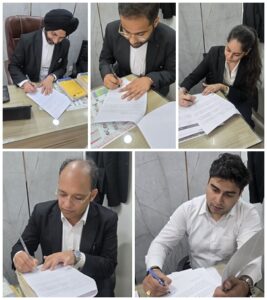
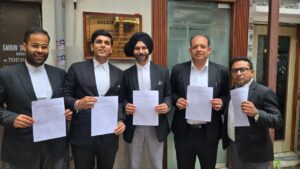
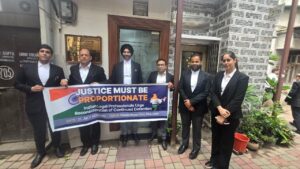
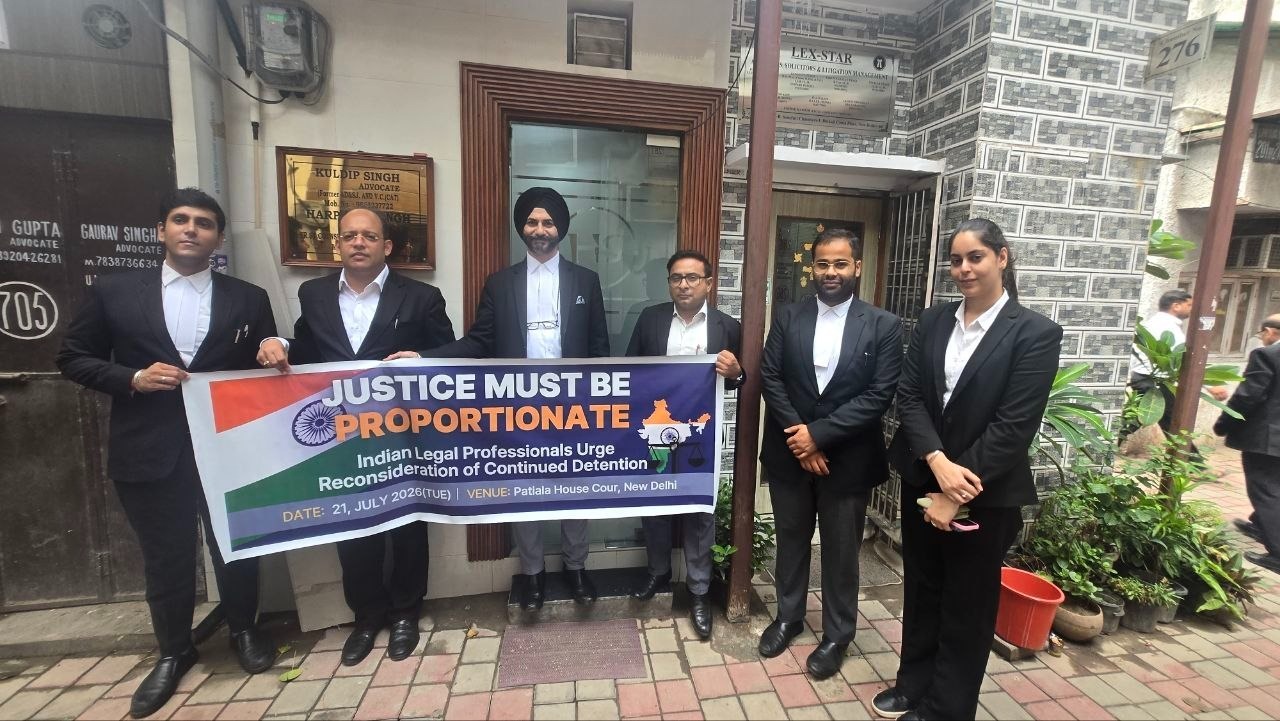
Indian advocates practicing before the Supreme Court and various High Courts of India gathered near Patiala House Court in New Delhi to hold the “Indian Legal Community Solidarity Statement Signing Event on Due Process and Human Rights Protection.” Led by Harpreet Singh – Advocate of the Central Administrative Tribunal, Former Vice President of the Delhi Advocates Association, and Prosecutor at the Ministry of Finance – legal professionals formally signed a joint statement calling for adherence to the presumption of innocence and the principle of proportionality in the ongoing detention of Shincheonji Church of Jesus Chairman Lee Man-hee in the Republic of Korea.
This statement signing event originated when Harpreet Singh, upon learning of Chairman Lee’s detention, raised the issue of his own accord with deep concern as a legal professional. He expressed strong disapproval, noting that “this is not the treatment a man who has dedicated his life to peace deserves, and neither of us has seen a precedent like this in India.”
The joint statement emphasized the presumption of innocence, respect for human dignity, and the protection of personal liberty as the foundations of the rule of law, and stipulated that pre-trial detention must remain an exceptional measure rather than the norm. Noting that Chairman Lee is 95 years of age and has openly engaged with the international community for decades, the statement raised fundamental questions as to whether his continued detention on grounds of flight risk and evidence destruction satisfies the tests of necessity and proportionality.
It also emphasized that this matter extends beyond the Republic of Korea alone, speaking to the universal human rights principle that arbitrary detention of religious or ideological minorities must not be allowed to recur anywhere in the world.
The statement set forth three formal calls to action. First, that the Judiciary of the Republic of Korea reconsider the necessity of Chairman Lee’s continued detention in light of the presumption of innocence and the principle of proportionality. Second, that where less restrictive alternatives – including conditional bail – are capable of securing the accused’s presence at trial and protecting the integrity of the proceedings, such alternatives should ordinarily be preferred. Third, the signatories pledged that this statement would not remain a one-off declaration, but would be formally conveyed to India’s National Human Rights Commission (NHRC) and relevant United Nations human rights bodies to sustain ongoing attention and solidarity.
Harpreet Singh emphasized that “judicial authorities should take upon the task of monitoring investigations so that the rule of law – that is, the presumption of innocence until proven guilty – is upheld.” On the detention of Chairman Lee, he stated that “regardless of the allegations, as I understand it, there are no serious criminal charges against Chairman Lee, and detaining a 95-year-old man who is not involved in any serious or heinous crime is simply uncalled for. We hope the investigation is done in the right manner and that the detention stops.”
On his decision to sign, he added: “As a lawyer who advocates for personal rights and liberties, I hope this statement sends a clear message to the government that the investigation must be conducted in the most rightful manner and that valuable human rights must be upheld.”
Jitin Sinhal, Advocate of the Delhi High Court, stressed that “the principle that a person is innocent until proven guilty must always be upheld,” adding that “detaining a 95-year-old in a detention center is very unprecedented. If there are concerns about flight or interference with the investigation, appropriate conditions can be imposed instead of detention so that his liberty is not curtailed.”
The legal professionals who led this event stated their commitment to ensuring that the statement does not remain a one-off declaration. The signed statement is to be formally conveyed to India’s National Human Rights Commission (NHRC) and relevant United Nations human rights bodies, and will also be delivered to the Korean Embassy in India.
Furthermore, building on this initial signature campaign centered on Supreme Court advocates, plans are underway to expand the campaign to High Court advocates, judges, and human rights lawyers.