Artificial Intelligence and the Future of Legal Research- Opportunities, Challenges and Ethical Concerns
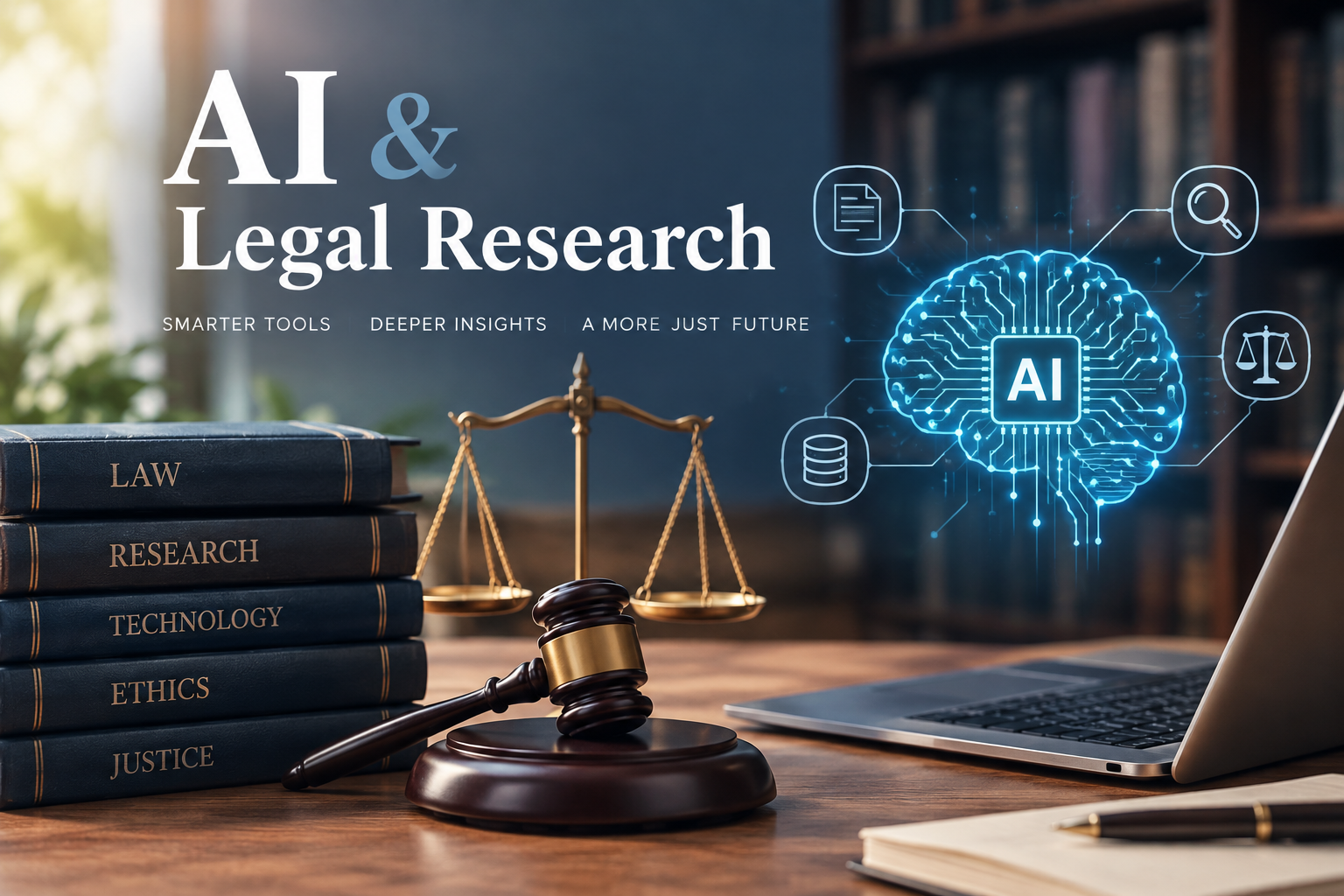
Artificial Intelligence is rapidly changing the way legal researchers discover, organise, analyse, and engage with academic and legal material. But while AI can significantly accelerate the research process, its use also raises important questions concerning accuracy, verification, academic integrity, bias, confidentiality, and the role of human judgment in legal scholarship.
This presentation, delivered as a guest lecture by Dr. Niteesh Kumar Upadhyay, explores the evolving relationship between Artificial Intelligence and legal research and offers a practical framework for using AI tools responsibly.
What does the presentation cover?
The presentation takes a stage-wise approach to AI-assisted legal research, covering:
- Filtering & Shortlisting: Using tools such as ChatPDF to assess the relevance of lengthy judgments, articles, and reports before undertaking deeper reading.
- Finding the Right Data: Exploring Elicit, Consensus and Semantic Scholar for discovering relevant academic literature and building an initial evidence base.
- Literature Review: Using Connected Papers and Litmaps to map citation networks, identify foundational research, and trace developments in a field.
- Visualization: Examining Napkin AI for converting complex legal concepts and written material into diagrams and visual representations.
- Citation Management: Discussing Zotero, Paperpile and Scite.ai and the continuing importance of accurate and traceable citations.
The presentation also examines the opportunities created by AI, including faster discovery, improved visualization, lower barriers to research, and greater time for critical analysis.
At the same time, it addresses significant challenges and ethical concerns, including hallucinated authorities and citations, over-reliance on AI-generated summaries, bias in training data, academic integrity concerns, and data-privacy risks.
A Note of Caution
A central message of the lecture is that Generative AI should assist legal research rather than replace genuine legal scholarship.
The presentation recommends using AI primarily for tasks such as discovery, filtering, visualization, and organisation, while retaining human responsibility for reading, analysis, argumentation, and writing. It also emphasises verification of AI-generated citations against authoritative legal sources and the need for institutional guidelines on responsible AI use.
Key Takeaway
AI should accelerate the process of research — not replace the thinking and writing that make it scholarship.
The future of legal research lies not simply in adopting more AI tools, but in integrating them thoughtfully with human expertise, critical reasoning, ethical safeguards, verification, and academic integrity.