
Call for Papers: for the Conference on Uncertain Democracies: Rethinking Governance in a Changing Global System
As a scientific association with over 4,500 members worldwide, we are pleased to organize the 29th IPSA World Congress in Rome for the second time since 1958. Rome, with a history spanning over two thousand years, is regarded as the world’s first great modern metropolis. The city played a pivotal role in shaping the artistic and cultural heritage of Western civilization. UNESCO designated Rome’s entire historic center as a World Heritage Site in 1980, celebrating iconic landmarks such as the Colosseum, the Pantheon, the Trevi Fountain, the Roman Forum, the Palatine Hill, and many others.
The 2027 IPSA World Congress will be organized from 24-28 July 2027 in collaboration with LUISS Guido Carli and the Società Italiana di Scienza Politica (SISP). The Congress program will be developed under the guidance of Program Co-Chairs Vanessa Elias de Oliveira (Brazil) and Francesca Longo (Italy), under the theme Uncertain Democracies: Rethinking Governance in a Changing Global System. Please click here to learn more about the Program Co-Chairs.
THEME | Uncertain Democracies: Rethinking Governance in a Changing Global System
In a world marked by rapid and uncertain geopolitical shifts, economic disruptions, and technological revolutions, democracy finds itself at a crossroads. Traditional governance structures are under strain as a result of rising populism, digital authoritarianism, the erosion of social rights and public services provisions, the rising ride of human migration and the consequent growing of multiethnic societies. What’s more, non-state actors now assume many of the functions previously provided by State and public institutions. As a result, private actors are wielding greater political influence, albeit without the accountability typically demanded of their public counterparts.
Furthermore, the global power structure is undergoing dramatic changes, with a host of factors exerting a strong and direct effect on global and national democracy. These include the emergence of new international actors, tectonic changes in the political landscape in powerful and influential countries, specifically in regard to key global issues; the weakening of multilateralism, the crisis of international organizations, and the influence of populism and extreme nationalist movements on global climate change and immigration policies. Likewise, the quality of democracy is under threat from rising economic inequality, both nationally and globally.
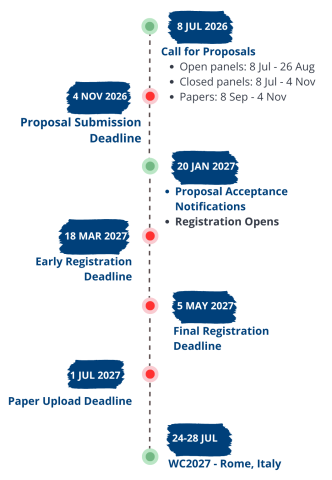
For more details, refer here